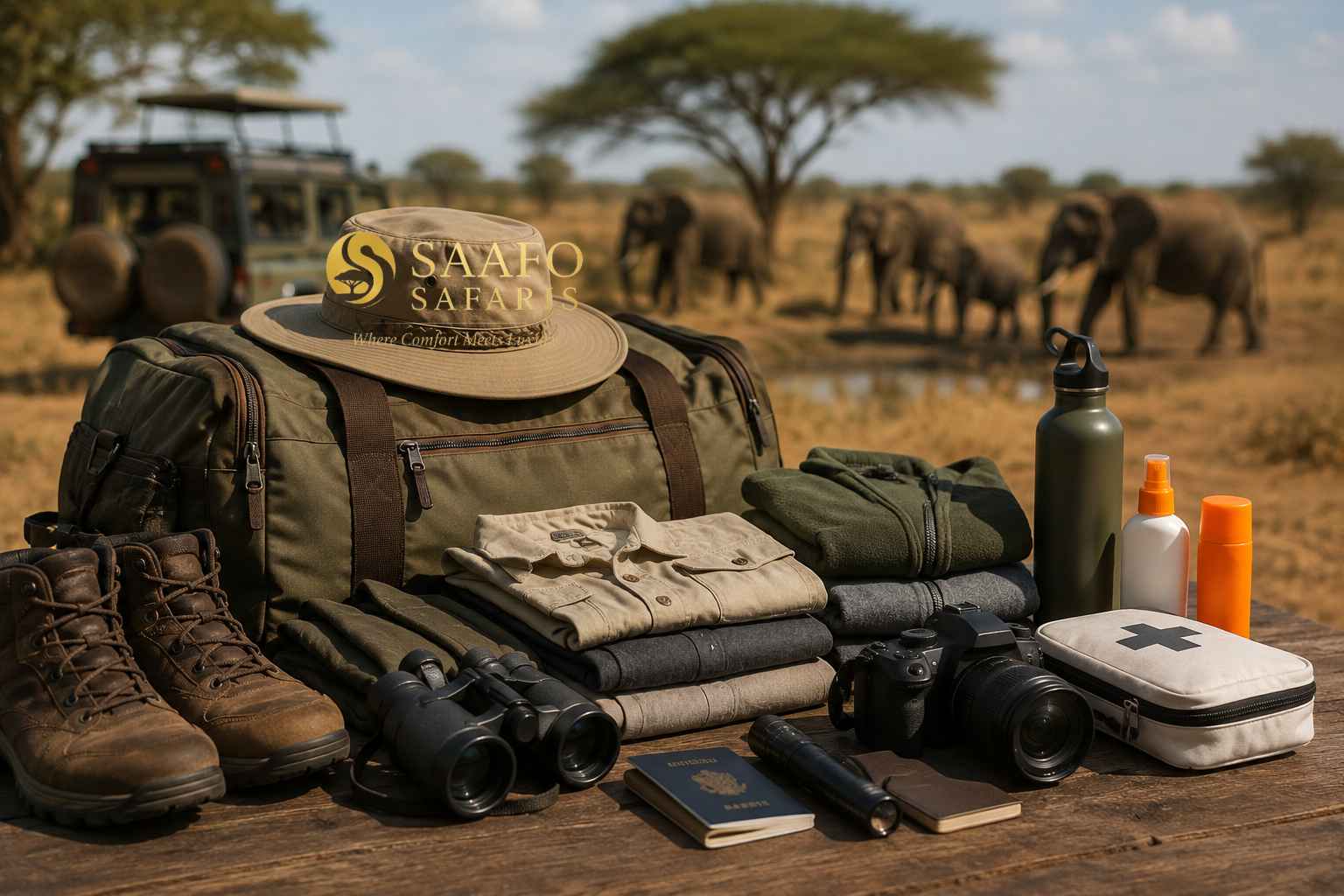
Knowing exactly what to pack for an East Africa safari makes the difference between a trip where you’re comfortable and ready for anything, and one where you’re stuck in the wrong shoes during a game drive or missing a charger on day two. This is a full safari packing list covering clothing, footwear, gear, documents, and health essentials for Kenya, Uganda, Rwanda, and Tanzania, plus a few things that catch first-time travelers off guard.
Choosing the Right Luggage
Before you even think about what goes inside, think about the bag itself. If any part of your trip includes a light aircraft transfer (common for the Masai Mara, Samburu, or remote camps), you’ll usually be limited to around 15kg per person in a soft-sided duffel bag, since hard-shell suitcases don’t fit in small aircraft holds. Even on road-based safaris, a soft duffel is easier to fit into a safari vehicle than a rigid case. Pack a smaller daypack too, for cameras, snacks, and layers you’ll want quick access to during game drives.
Safari Clothing: What to Wear on Safari
Getting your clothing right is the core of any safari packing list, and a few rules apply across Kenya, Tanzania, Uganda, and Rwanda alike:
- Stick to neutral colors: Khaki, olive, beige, and light brown blend into the bush and don’t spook wildlife. Avoid bright colors like white and bright red, which can startle animals and show dirt quickly.
- Avoid dark blue and black: These colors attract tsetse flies in certain regions, particularly around Lake Nakuru, the Mara, and parts of Tanzania. Their bite is genuinely unpleasant, so this one is worth taking seriously.
- Leave camouflage prints at home: Camouflage-patterned clothing is restricted or illegal for civilians in several East African countries, including Kenya, since it’s reserved for military use.
- Pack in layers: Early morning game drives can start below 15°C even during the hottest months, then climb quickly once the sun is up. A base layer, a warm mid-layer (like a fleece), and a light waterproof outer layer covers most mornings.
- Long sleeves and long pants: Useful for sun protection and mosquito coverage, especially at dusk and dawn.
- A warm jacket or fleece: Non-negotiable for early morning drives, particularly at higher-altitude parks like the Ngorongoro Crater or the Aberdares.
- A light rain jacket: Especially important during the green season (March to May and November).
- Swimwear: Many safari lodges have pools, and it’s essential if you’re combining your trip with a Zanzibar or coastal extension.
Footwear for Safari
You don’t need heavy hiking boots for a standard vehicle-based safari, but the right footwear still matters:
- Comfortable closed-toe walking shoes or light hiking shoes for game drives and walking safaris
- Sandals or flip-flops for evenings around the lodge or camp
- Waterproof, sturdy hiking boots with ankle support if your trip includes gorilla trekking in Bwindi or Volcanoes National Park, along with a pair of gaiters to keep mud and safari ants out
Sun and Insect Protection
- A wide-brimmed hat or safari cap
- Sunglasses with UV protection
- High-SPF sunscreen (SPF 30 or higher), since East Africa’s equatorial sun is stronger than most travelers expect
- Insect repellent containing DEET, applied especially at dawn and dusk when mosquitoes are most active
- Lip balm with SPF, as dry air and altitude can chap lips quickly
Health and Medication
- Malaria prophylaxis (consult your doctor before travel, as most of East Africa’s safari regions are malaria zones)
- A basic first aid kit with plasters, antiseptic, pain relievers, and rehydration salts
- Personal prescription medication in its original packaging, with a spare supply in a separate bag in case one bag is delayed
- Hand sanitizer and a small pack of wet wipes, genuinely useful after dusty game drives
- Motion sickness tablets if you’re prone to it, since safari roads can be bumpy
Documents You Cannot Forget
This is the section that causes the most stress when something is missing, so double-check it a few days before departure, not the morning of your flight:
- Valid passport with at least six months’ validity remaining and blank pages for visa stamps
- Visa for your destination country/countries, arranged in advance or on arrival depending on your nationality
- Yellow fever vaccination certificate, required for entry to Kenya, Tanzania, Uganda, and Rwanda if you’re arriving from or have transited through a country with risk of yellow fever transmission
- Travel insurance documents, including emergency evacuation cover, which most reputable safari operators strongly recommend or require
- Printed and digital copies of your itinerary, flight bookings, and permits (especially important if your trip includes gorilla trekking, where your permit is checked against your passport at the park gate)
- A copy of your passport and visa stored separately from the originals, plus a digital copy saved to your email or cloud storage
Electronics and Camera Gear
- Universal travel adapter: Kenya, Tanzania, Uganda, and Rwanda use the UK-style Type G plug (Rwanda also uses Type C and J in some areas), running on 220 to 240V
- Portable power bank: Many camps run on generators or solar power with limited charging hours
- Camera with a zoom lens (at least 200mm equivalent is recommended for wildlife shots) plus spare batteries and memory cards
- Binoculars: One pair per person if possible, since sharing during a great sighting rarely works out well
- A dust-proof bag or case for electronics, since safari roads are genuinely dusty
Extra Gear Worth Bringing
- A reusable water bottle, ideally insulated
- A headlamp or small flashlight, since many camps have limited lighting after dark and generators sometimes switch off overnight
- Earplugs, useful for wildlife sounds at night that some travelers find hard to sleep through at first
- A dry bag for boat safaris or trips involving Lake Naivasha or Lake Victoria
- Cash in small denominations of US dollars (post-2013 bills, as older notes are often rejected) for tips and small purchases
Special Packing Notes for Gorilla Trekking
If your itinerary includes gorilla trekking in Bwindi or Volcanoes National Park, a few extra items matter. See our full guide on gorilla trekking permits in Uganda vs Rwanda for the booking side, but on the packing side, bring:
- Waterproof, ankle-supporting hiking boots already broken in before your trip
- Long, thick trousers and long-sleeved shirts to protect against nettles and safari ants in the forest
- Gardening-style gloves for gripping vegetation on steep sections
- Gaiters to keep mud and insects out of your boots
- A lightweight, packable rain jacket, since rainforest weather changes quickly
What Not to Bring on Safari
- Camouflage clothing or gear (restricted for civilians in several East African countries)
- Hard-shell suitcases if any part of your trip involves light aircraft transfers
- Excessive luggage. Most lodges offer complimentary or low-cost laundry service, so you genuinely don’t need to pack for every single day
- Drones, without prior written permission. Most national parks and reserves across East Africa either ban or heavily restrict drone use
- Single-use plastic bags, which are banned in Kenya, Tanzania, and Rwanda and can be confiscated at the airport
Quick Reference Packing List
| Category | Key Items |
|---|
| Clothing | Neutral-colored layers, warm fleece, rain jacket, long sleeves, swimwear |
| Footwear | Walking shoes, sandals, waterproof boots (for gorilla trekking) |
| Sun & insects | Hat, sunglasses, sunscreen, insect repellent, lip balm |
| Health | Malaria medication, first aid kit, prescriptions, sanitizer |
| Documents | Passport, visa, yellow fever certificate, insurance, permits, itinerary copies |
| Electronics | Adapter, power bank, camera, spare batteries, binoculars |
| Extras | Water bottle, headlamp, earplugs, small-denomination cash |
Ready to Start Planning Your Safari?
Once your bags are figured out, the next step is locking in the right itinerary and season. If you haven’t already, check our guide on the best time to visit Kenya for a safari to line up your trip with the weather and wildlife you want to see. Browse our full range of safari tour packages, or get in touch and our team will help you build a packing plan around your specific itinerary.
Keep Reading