If you’re comparing gorilla trekking permits in Uganda vs Rwanda, the permit itself is the single biggest decision you’ll make. It determines your budget, your trek difficulty, and even your entire itinerary, since Uganda and Rwanda run completely different systems. This guide breaks down current permit prices, booking rules, and the practical differences between the two countries, so you can decide with real numbers instead of guesswork.
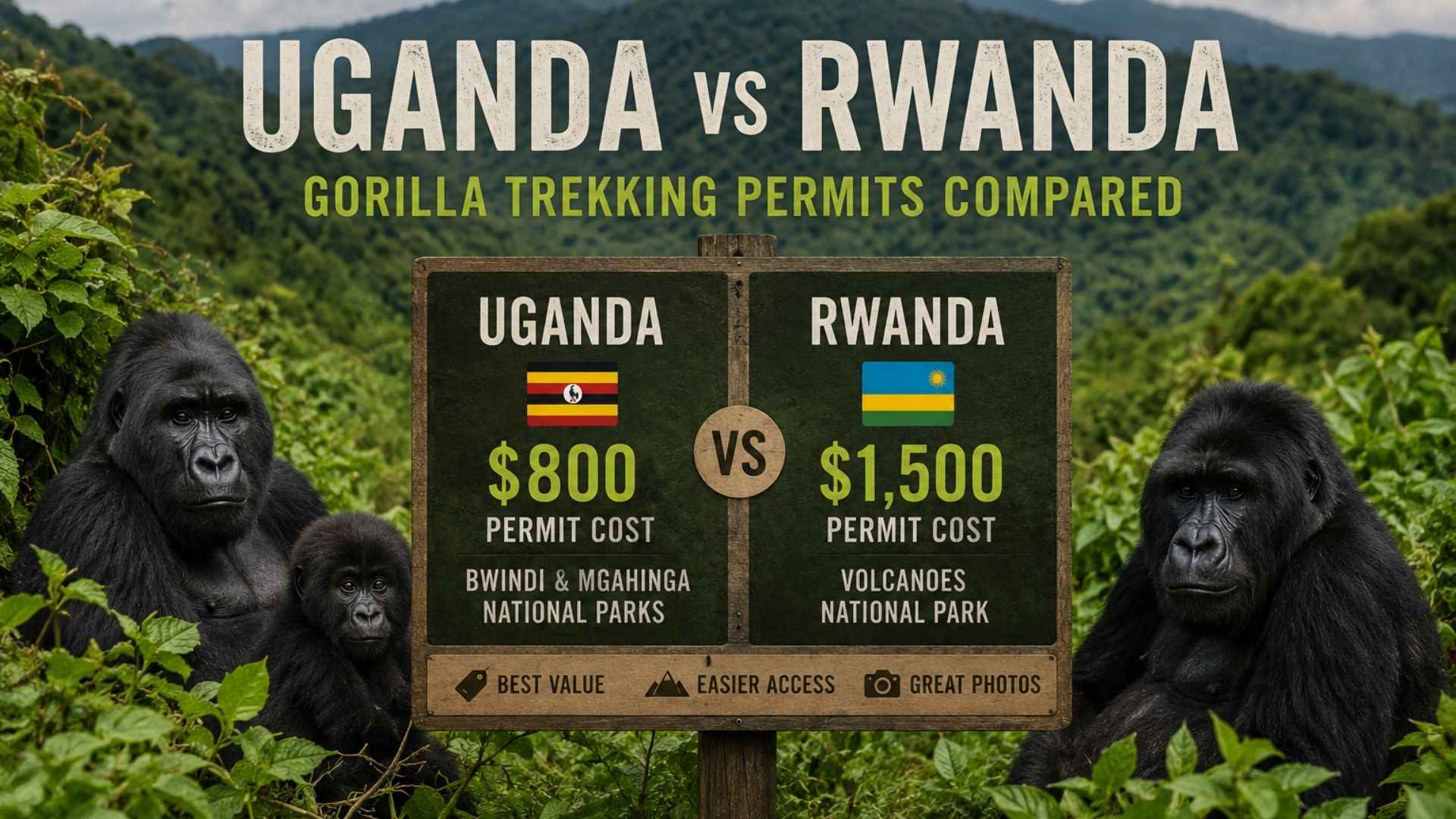
A Uganda gorilla permit costs $800 per person for foreign non-residents during high season. Uganda also offers a discounted rate of $600 during the low-season months of April, May, and November, though those dates typically can’t be rescheduled if conditions change. Foreign residents pay $700, and East African citizens pay a heavily reduced local rate.
Permits are issued exclusively by the Uganda Wildlife Authority (UWA) and cover trekking in Bwindi Impenetrable National Park or Mgahinga Gorilla National Park. Roughly 128 to 160 permits are released daily across both parks, spread across Bwindi’s four trekking sectors.
The Rwanda gorilla permit price is a flat $1,500 per person, with no seasonal discount. That said, Rwanda does offer a reduced rate of $1,050 for travelers who spend two or more nights visiting Akagera or Nyungwe National Parks between November and May, so it’s worth asking your operator about that combination if you’re on a longer Rwanda itinerary.
All Rwanda permits are for treks in Volcanoes National Park, and Rwanda releases around 96 permits per day. Because the park sits only about 2.5 hours from Kigali’s international airport, Rwanda is the easier country to reach with minimal travel time built in.
There’s no single right answer here, it comes down to your priorities:
Both countries offer roughly a 95 to 99 percent chance of successfully finding gorillas on any given trek, so sighting odds shouldn’t be the deciding factor. If you’re weighing East Africa’s other major decision, our guide on Kenya vs Tanzania Safari covers a similar comparison for travelers building a longer, multi-country itinerary.
Here’s what the booking process actually looks like for both countries:
Both the Uganda and Rwanda permit cover park entry fees, ranger guides, trackers, and one full hour with the gorilla family once you find them. Uganda additionally offers a unique Gorilla Habituation Experience in Bwindi, which extends your time to four hours with a semi-habituated family for a separate fee, ideal for serious photographers or wildlife enthusiasts who want more than the standard hour allows.
It’s also worth knowing that a meaningful share of every permit fee goes directly toward conservation and local community projects, including schools and health clinics near the parks, so the cost is genuinely tied to protecting the roughly 1,000 mountain gorillas left in the wild.
Whether you go with Uganda’s better value or Rwanda’s easier access, the permit is only one piece of planning a gorilla trekking trip. SAAFO Safaris handles the full itinerary, permits included, so you don’t have to navigate booking rules and sector allocations on your own. Explore our 8-Day Uganda Gorilla Trekking Safari, our faster 3-Day Rwanda Gorilla Trekking option, or read more about the park itself on our Bwindi Impenetrable National Park destination page. You can also browse the full range of safari tour packages or contact us to start planning.